

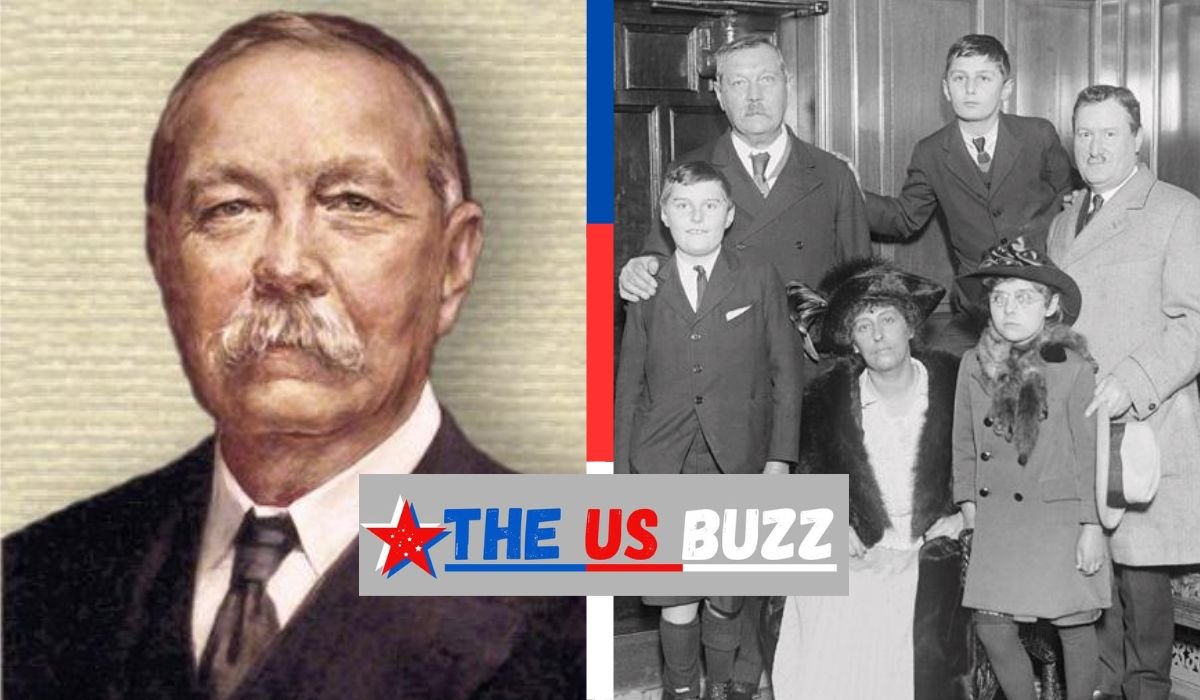
Arthur Conan Doyle was one of the most influential writers in literary history, best known as the brilliant mind behind Sherlock Holmes, the world’s most famous fictional detective. His stories transformed crime fiction forever and introduced readers to a new style of mystery based on logic, observation, and scientific thinking. Beyond creating Sherlock Holmes, Doyle was also a physician, historian, political activist, sports enthusiast, and a writer who explored many different genres.
Born in Edinburgh, Scotland, in 1859, Arthur Conan Doyle followed an unusual path from studying medicine to becoming a globally recognized author. His medical education helped shape his approach to storytelling, especially the careful observation and deduction that became the foundation of Sherlock Holmes. Although Holmes became his most famous creation, Doyle produced hundreds of works, including adventure novels, historical fiction, science fiction, poetry, and non-fiction.
Quick Bio Information About Arthur Conan Doyle
| Information | Details |
|---|---|
| Full Name | Sir Arthur Ignatius Conan Doyle |
| Famous Name | Arthur Conan Doyle |
| Born | 22 May 1859 |
| Birthplace | Edinburgh, Scotland |
| Died | 7 July 1930 |
| Age At Death | 71 Years |
| Profession | Writer And Physician |
| Famous For | Creating Sherlock Holmes |
| Education | University Of Edinburgh Medical School |
| Nationality | British |
| Father | Charles Altamont Doyle |
| Mother | Mary Foley Doyle |
| First Wife | Louisa Hawkins |
| Second Wife | Jean Leckie |
| Children | Five Children |
| First Sherlock Holmes Story | A Study In Scarlet (1887) |
| Famous Character | Sherlock Holmes |
| Other Famous Work | The Lost World |
| Knighthood | Received In 1902 |
| Main Genres | Detective Fiction, Fantasy, Science Fiction, Historical Fiction |
Arthur Conan Doyle’s Early Life And Family Background
Arthur Conan Doyle was born on 22 May 1859 at Picardy Place in Edinburgh, Scotland. His father, Charles Altamont Doyle, was an artist, while his mother, Mary Foley Doyle, came from an Irish Catholic family. Doyle grew up in a household where storytelling was highly valued, and his mother played an important role in developing his imagination by sharing stories and encouraging reading.
His childhood was not always easy. His father suffered from alcoholism and serious health problems, which created difficulties for the Doyle family. During Arthur’s early years, the family experienced financial struggles, and he was sometimes separated from his parents. These experiences shaped his personality and gave him a deeper understanding of human struggles.
Despite these challenges, Doyle developed a strong imagination and curiosity about the world around him. His early exposure to books, history, and adventure stories later influenced the themes that appeared throughout his writing career.
Arthur Conan Doyle’s Education And Medical Training
Arthur Conan Doyle received his early education at Stonyhurst College in England, a strict Jesuit school where he studied classical subjects, mathematics, and literature. Although he later criticized some aspects of the school’s discipline, his education helped develop his analytical thinking.
After completing his schooling, Doyle studied medicine at the University of Edinburgh Medical School from 1876 to 1881. During this period, he learned the importance of careful observation and scientific reasoning.
One of the most important influences during his medical education was Dr. Joseph Bell, a professor known for his remarkable ability to identify details about patients simply through observation. Bell’s methods inspired Doyle when creating Sherlock Holmes, especially Holmes’s ability to solve mysteries by noticing small details others ignored.
From Doctor To Writer: Arthur Conan Doyle’s Literary Beginning
Before becoming a famous author, Arthur Conan Doyle worked as a doctor. After completing his medical studies, he served as a ship surgeon and later opened a medical practice in Portsmouth, England.
However, his medical career did not bring the success he expected. His practice struggled because he had few patients, giving him more time to focus on writing. During his medical years, Doyle began creating short stories and developing his skills as an author.
His first published fiction work was “The Mystery of Sasassa Valley” in 1879. He continued writing while practicing medicine, slowly building his reputation as a talented storyteller.
Doyle’s medical background became one of his greatest strengths as a writer because it allowed him to combine science, logic, and human psychology in his stories.
The Creation Of Sherlock Holmes: A Character That Changed Literature
The greatest achievement of Arthur Conan Doyle’s career was the creation of Sherlock Holmes. The detective first appeared in the novel A Study in Scarlet, published in 1887. The story introduced readers to Sherlock Holmes and his loyal companion Dr. John Watson.
Sherlock Holmes was different from previous fictional detectives because he relied on scientific methods, detailed observation, and logical reasoning rather than simple guesses. Doyle created Holmes as a consulting detective who solved difficult cases by studying clues that others overlooked.
The character was partly inspired by Dr. Joseph Bell, but Doyle transformed those real-life observations into a fictional detective unlike anyone readers had seen before.
Sherlock Holmes Success And Famous Stories
After the introduction of Sherlock Holmes, Arthur Conan Doyle quickly became one of the most popular writers of his time. The detective’s popularity increased dramatically when Holmes stories began appearing in The Strand Magazine.
Some of the most famous Sherlock Holmes works include:
A Study in Scarlet
This was the first Sherlock Holmes story and introduced Holmes and Watson.
The Sign of the Four
This novel expanded Holmes’s world and developed his relationship with Watson.
The Adventures of Sherlock Holmes
This collection of short stories helped make Holmes internationally famous.
The Hound of the Baskervilles
One of the most popular detective novels ever written.
Doyle eventually wrote four Sherlock Holmes novels and fifty-six short stories.
Why Arthur Conan Doyle Wanted To End Sherlock Holmes
Although Sherlock Holmes made Arthur Conan Doyle famous, the author sometimes felt frustrated because the detective overshadowed his other writing.
In 1893, Doyle wrote “The Final Problem,” a story in which Holmes appeared to die after a confrontation with Professor Moriarty at Reichenbach Falls.
However, readers strongly protested the decision. Many fans demanded Holmes’s return, and Doyle eventually brought the character back in The Hound of the Baskervilles and later stories.
This event showed just how powerful the connection between readers and Sherlock Holmes had become.
Arthur Conan Doyle’s Other Famous Works
Although Sherlock Holmes remains his greatest achievement, Arthur Conan Doyle wrote many other important works.
One of his most famous non-Holmes books was The Lost World (1912), an adventure science-fiction novel featuring Professor Challenger. The book became influential in the development of the “lost world” genre.
Doyle also wrote historical novels, including The White Company and Sir Nigel, which explored medieval life and adventure.
His writing career was much broader than detective fiction, showing his ability to create stories across many different genres.
Arthur Conan Doyle’s Marriage, Wife, And Children
Arthur Conan Doyle married Louisa Hawkins in 1885. Their marriage lasted until her death in 1906. Together, they had children and built a family while Doyle continued developing his writing career.
In 1907, Doyle married Jean Leckie, whom he had known for several years. They lived together in Crowborough, Sussex, where Doyle spent his later years.
Family played an important role in Doyle’s life. Personal experiences, including family tragedies, influenced many of his beliefs and interests.
Arthur Conan Doyle’s Beliefs And Spiritualism
Arthur Conan Doyle was a person with many interests and changing beliefs. He was raised Catholic but later became agnostic before developing a strong interest in spiritualism.
After experiencing personal losses, Doyle became interested in ideas related to life after death and supernatural experiences. He supported spiritual research and believed in certain psychic phenomena.
One of the most controversial moments of his life involved the Cottingley Fairies photographs, which were later revealed to be a hoax. This affected his reputation among some critics.
Arthur Conan Doyle’s Activism And Public Life
Doyle was not only a writer; he was also involved in public issues. He wrote about political and social matters and supported causes he believed were important.
He defended compulsory vaccination, supported Britain during the Boer War, and wrote about justice reforms.
Doyle was especially interested in protecting people who had been wrongly accused of crimes. His investigations into legal cases helped bring attention to problems within the justice system.
Arthur Conan Doyle’s Sports Interests And Hobbies
Outside writing, Arthur Conan Doyle enjoyed many sports. He played football as a goalkeeper and was also passionate about cricket.
He played first-class cricket matches and participated in teams made up of famous writers. He also enjoyed boxing, golf, and skiing.
His love for adventure and physical activities reflected the energetic personality that appeared in many of his stories.
Awards, Knighthood, And Achievements
Arthur Conan Doyle received many honors during his lifetime. In 1902, he was knighted by King Edward VII for his public contributions.
His greatest achievement remains his influence on literature. Sherlock Holmes changed detective fiction and inspired countless writers, filmmakers, and storytellers.
Today, Doyle is remembered as one of the most important British authors ever.
Arthur Conan Doyle’s Death And Legacy
Arthur Conan Doyle died on 7 July 1930 at the age of 71 in Crowborough, Sussex, England.
Although he passed away nearly a century ago, his work continues to attract readers worldwide. Sherlock Holmes remains one of the most recognizable fictional characters in history, appearing in countless films, television shows, books, and adaptations.
Doyle’s legacy is not limited to one detective. His contribution to mystery writing, adventure fiction, and popular culture continues to influence modern storytelling.
Final Thoughts: Remembering Arthur Conan Doyle
Arthur Conan Doyle’s life was filled with creativity, curiosity, and unexpected achievements. He began as a medical student, became a doctor, and eventually transformed into one of the greatest writers in history.
Through Sherlock Holmes, Doyle changed the way people viewed detective stories and introduced generations of readers to the power of logic and observation. However, his legacy extends far beyond one character. His adventure novels, historical stories, and contributions to public discussions show that he was a writer with remarkable range.
More than 100 years after Sherlock Holmes first appeared, Arthur Conan Doyle’s imagination continues to inspire readers around the world. His work remains a reminder that great storytelling can survive across generations and continue to capture human curiosity.
Frequently Asked Questions About Arthur Conan Doyle
Who Was Arthur Conan Doyle?
Arthur Conan Doyle was a British writer and physician best known for creating Sherlock Holmes. He also wrote adventure novels, historical fiction, science fiction, and many other works.
What Is Arthur Conan Doyle Famous For?
Arthur Conan Doyle is famous for creating Sherlock Holmes, the legendary detective known for observation, deduction, and solving complex mysteries.
Was Arthur Conan Doyle A Real Doctor?
Yes, Arthur Conan Doyle studied medicine at the University of Edinburgh and worked as a doctor before becoming a full-time writer.
How Many Sherlock Holmes Stories Did Arthur Conan Doyle Write?
Arthur Conan Doyle wrote four Sherlock Holmes novels and fifty-six short stories featuring the famous detective.
What Is Arthur Conan Doyle’s Most Famous Book?
While many works are popular, The Hound of the Baskervilles is considered one of his most famous Sherlock Holmes novels.
When Did Arthur Conan Doyle Die?
Arthur Conan Doyle died on 7 July 1930 at the age of 71.
What Inspired Sherlock Holmes?
Sherlock Holmes was partly inspired by Dr. Joseph Bell, a medical professor known for his exceptional observation skills.
Learn more and explore exciting content on: Elaine Mason Biography: Stephen Hawking’s Former Wife, Life, Career, and Story
[…] Learn more and explore exciting content on: Arthur Conan Doyle Biography: The Life, Career, and Legacy of Sherlock Holmes’ Creator […]